
Pappy Van Winkle
Buffalo Trace
Pappy Van Winkle is the most allocated, most sought-after, and most discussed bourbon line in American whiskey — a six-bottle annual release produced by the Old Rip Van Winkle Distillery under the leadership of third-generation Van Winkle family member Julian Van Winkle III, with all current production carried out at Buffalo Trace Distillery (DSP-KY-113) in Frankfort, Kentucky under a joint venture established with the Sazerac Company in June 2002. Every Van Winkle bottle is built on Pappy Van Winkle Sr.'s original wheated bourbon recipe — corn, soft red winter wheat, and malted barley in place of the rye most bourbon distilleries use — a recipe whose lineage traces back to the legendary Stitzel-Weller Distillery in Shively, Kentucky, where Pappy was appointed president on Derby Day 1935 and famously declared, "We make fine bourbon. At a profit if we can, at a loss if we must, but always fine bourbon."
The Van Winkle line ships every fall — typically late October into November — across six core expressions: Old Rip Van Winkle Handmade Bourbon 10 Year (107 proof, $149.99 SRP), Van Winkle Special Reserve Bourbon 12 Year (the "Lot B" expression, 90.4 proof, $169.99 SRP), Van Winkle Family Reserve Rye 13 Year (95.6 proof, $229.99 SRP), Pappy Van Winkle's Family Reserve Bourbon 15 Year (107 proof, $239.99 SRP), Pappy Van Winkle's Family Reserve Bourbon 20 Year (90.4 proof, $359.99 SRP), and Pappy Van Winkle's Family Reserve Bourbon 23 Year (95.6 proof, $499.99 SRP). The 10, 12, 13, and 15 Year expressions are produced from post-2002 wheated bourbon distilled at Buffalo Trace using Pappy's recipe under the Sazerac partnership. The 20 Year and 23 Year expressions still contain meaningful quantities of original Stitzel-Weller stock — the wheated bourbon Pappy himself and his son Julian Jr. produced at Shively before the distillery closed in 1992 — making these the last commercially-released bourbons in the world to carry verified Stitzel-Weller lineage.
The combination of the Van Winkle family heritage, the strict wheated recipe consistency, Buffalo Trace's deep aging-stock inventory, the documented Stitzel-Weller lineage in the older expressions, the strictly limited fall allocation, and the cultural status the brand has achieved since the 2002 Sazerac partnership has made Pappy Van Winkle the most-traded bourbon line on the secondary market in the world. The Pappy 20 Year currently averages $3,420 per 750 mL on the secondary market — nearly 10x its $359.99 MSRP — and the 23 Year regularly trades north of $5,000 in collector markets, with 2013 vintages (the year Julian III publicly noted "may be the last of its kind" for full Stitzel-Weller 23 Year stock) commanding the steepest premiums. Cana Wine Co. carries every bottle in the Van Winkle annual lineup as they become available, sourced through licensed Kentucky distribution channels and inspected before listing.

Pappy Van Winkle
-


Old Rip Van Winkle 10 Year Old Handmade Kentucky Straight Bourbon Whiskey 750ml
Original price $799.99 - Original price $799.99Original price$799.99$799.99 - $799.99Current price $799.99Old Rip Van Winkle 10 Year Old is a highly allocated 107 Proof (53.5% ABV) straight bourbon produced as a limited annual release at the Buffalo Tra...
View full detailsOriginal price $799.99 - Original price $799.99Original price$799.99$799.99 - $799.99Current price $799.99 -


Van Winkle Special Reserve Lot B 12 Year Old Kentucky Straight Bourbon Whiskey 750ml
Original price $1,049.99 - Original price $1,049.99Original price$1,049.99$1,049.99 - $1,049.99Current price $1,049.99Van Winkle Special Reserve Lot B 12 year old is a highly allocated 90.4 Proof (45.2% ABV) straight bourbon produced as a limited annual release at ...
View full detailsOriginal price $1,049.99 - Original price $1,049.99Original price$1,049.99$1,049.99 - $1,049.99Current price $1,049.99 -
Pappy Van Winkle Family Reserve 15 Year Old Kentucky Straight Bourbon Whiskey 750ml
Original price $2,299.99Original price $2,299.99 - Original price $2,299.99Original price $2,299.99Current price $1,899.99$1,899.99 - $1,899.99Current price $1,899.99Pappy Van Winkle 15 Year Old Family Reserve is a highly allocated 107 Proof (53.5% ABV) straight bourbon produced as a limited annual release at th...
View full detailsOriginal price $2,299.99Original price $2,299.99 - Original price $2,299.99Original price $2,299.99Current price $1,899.99$1,899.99 - $1,899.99Current price $1,899.99Save $400.00 -
Pappy Van Winkle Family Reserve 20 Year Old Kentucky Straight Bourbon Whiskey 750ml
Original price $3,299.99Original price $3,299.99 - Original price $3,299.99Original price $3,299.99Current price $2,899.99$2,899.99 - $2,899.99Current price $2,899.99Pappy Van Winkle 20 Year Old Family Reserve is a highly allocated 90.4 Proof (45.2% ABV) straight bourbon produced as a limited annual release at t...
View full detailsOriginal price $3,299.99Original price $3,299.99 - Original price $3,299.99Original price $3,299.99Current price $2,899.99$2,899.99 - $2,899.99Current price $2,899.99Save $400.00 -
Pappy Van Winkle Family Reserve 23 Year Old Kentucky Straight Bourbon Whiskey 750ml
Original price $4,899.99Original price $4,899.99 - Original price $4,899.99Original price $4,899.99Current price $3,995.99$3,995.99 - $3,995.99Current price $3,995.99Pappy Van Winkle 23 Year Old Family Reserve is a highly allocated 95.6 Proof (47.8% ABV) straight bourbon produced as a limited annual release at t...
View full detailsOriginal price $4,899.99Original price $4,899.99 - Original price $4,899.99Original price $4,899.99Current price $3,995.99$3,995.99 - $3,995.99Current price $3,995.99Save $904.00 -
Van Winkle Family Reserve 13 Year Old Kentucky Straight Rye Whiskey 750ml
Original price $2,599.99Original price $2,599.99 - Original price $2,599.99Original price $2,599.99Current price $1,749.99$1,749.99 - $1,749.99Current price $1,749.99Pappy Van Winkle 13 Year Old Family Reserve is a highly allocated 95.6 Proof (47.8% ABV) straight rye whiskey produced as a limited annual release ...
View full detailsOriginal price $2,599.99Original price $2,599.99 - Original price $2,599.99Original price $2,599.99Current price $1,749.99$1,749.99 - $1,749.99Current price $1,749.99Save $850.00 -
Old Rip Van Winkle Family Reserve 10 Year, 12 Year, 13 Year, 15 Year, 20 Year & 23 Year Old Kentucky Straight Bourbon Whiskey Bundle 750ml 6-Pack
Original price $13,499.99Original price $13,499.99 - Original price $13,499.99Original price $13,499.99Current price $12,999.99$12,999.99 - $12,999.99Current price $12,999.99This full collection of Pappy Van Winkle’s bourbon is a must have for the discerning whiskey drinker who won’t settle for less than an excellent Am...
View full detailsOriginal price $13,499.99Original price $13,499.99 - Original price $13,499.99Original price $13,499.99Current price $12,999.99$12,999.99 - $12,999.99Current price $12,999.99Save $500.00 -

2017 Pappy Van Winkle Family Reserve 23 Year Old Kentucky Straight Bourbon Whiskey 750ml
Original price $4,899.99 - Original price $4,899.99Original price$4,899.99$4,899.99 - $4,899.99Current price $4,899.99Size: 750ml Proof: 95.6 (47.8% ABV) Age: 23 Year Origin: Kentucky, USA Distillery: Stitzel Weller
Original price $4,899.99 - Original price $4,899.99Original price$4,899.99$4,899.99 - $4,899.99Current price $4,899.99 -


Old Rip Van Winkle Handmade 10 Year Old 107 Proof Kentucky Straight Bourbon Whiskey (Squat Bottling)
Original price $2,999.99 - Original price $2,999.99Original price$2,999.99$2,999.99 - $2,999.99Current price $2,999.99The Old Rip Van Winkle Handmade 10 Year Old 107 Proof Kentucky Straight Bourbon Whiskey is a rare and sought-after gem for true whiskey lovers. Age...
View full detailsOriginal price $2,999.99 - Original price $2,999.99Original price$2,999.99$2,999.99 - $2,999.99Current price $2,999.99 -
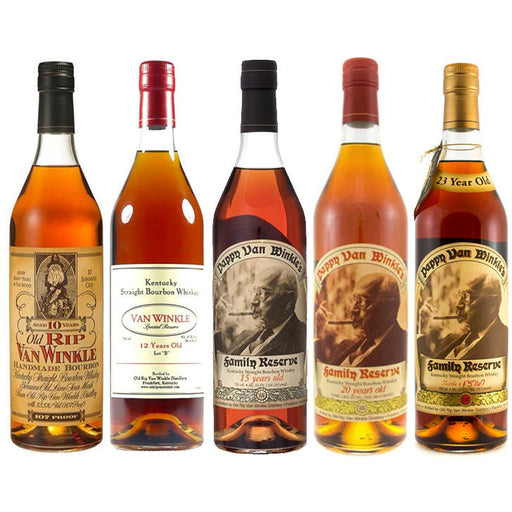
Old Rip Van Winkle Family Reserve 10 Year, 12 Year, 15 Year, 20 Year & 23 Year Old Kentucky Straight Bourbon Whiskey Bundle 750ml 5-Pack
Original price $10,499.99 - Original price $10,499.99Original price$10,499.99$10,499.99 - $10,499.99Current price $10,499.99This full collection of Pappy Van Winkle’s bourbon is a must have for the discerning whiskey drinker who won’t settle for less than an excellent Am...
View full detailsOriginal price $10,499.99 - Original price $10,499.99Original price$10,499.99$10,499.99 - $10,499.99Current price $10,499.99 -
2009 Pappy Van Winkle Family Reserve 15 Year Old 100% Stitzel-Weller Kentucky Straight Bourbon Whiskey 750ml
Original price $4,999.99Original price $4,999.99 - Original price $4,999.99Original price $4,999.99Current price $4,499.99$4,499.99 - $4,499.99Current price $4,499.99Size: 750ml Proof: 107 (53.5% ABV) Age: 15 Year Size: 750ml Origin: Kentucky, USA Distillery: Buffalo Trace
Original price $4,999.99Original price $4,999.99 - Original price $4,999.99Original price $4,999.99Current price $4,499.99$4,499.99 - $4,499.99Current price $4,499.99Sold out -
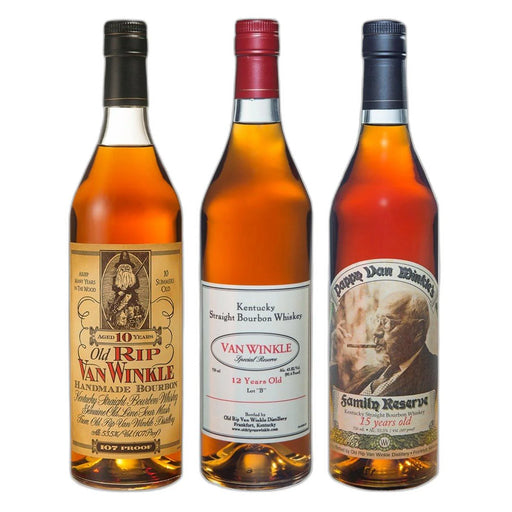
Old Rip Van Winkle Family Reserve 10, 12 & 15 Year 3 Pack Bundle 750ml
Original price $3,729.99Original price $3,729.99 - Original price $3,729.99Original price $3,729.99Current price $3,599.99$3,599.99 - $3,599.99Current price $3,599.99Old Rip Van Winkle 10 Year Old Introducing the Old Rip Van Winkle 10 Year Old Pappy Van Winkle's Family Reserve Kentucky Straight Bourbon Whiskey,...
View full detailsOriginal price $3,729.99Original price $3,729.99 - Original price $3,729.99Original price $3,729.99Current price $3,599.99$3,599.99 - $3,599.99Current price $3,599.99Save $130.00 -
Old Rip Van Winkle 25 Year Old Kentucky Straight Bourbon Whiskey 750ml
Original price $52,000.00Original price $52,000.00 - Original price $52,000.00Original price $52,000.00Current price $42,999.99$42,999.99 - $42,999.99Current price $42,999.99Old Rip Van Winkle 25 Year Old Kentucky Straight Bourbon Whiskey 750ml is an exceptionally rare and luxurious whiskey, aged to perfection for over ...
View full detailsOriginal price $52,000.00Original price $52,000.00 - Original price $52,000.00Original price $52,000.00Current price $42,999.99$42,999.99 - $42,999.99Current price $42,999.99Save $9,000.01 -

Old Rip Van Winkle Van Winkle Special Reserve Cork n Bottle 20 Year Old Straight Bourbon Whiskey 750ml
Original price $48,999.99 - Original price $48,999.99Original price$48,999.99$48,999.99 - $48,999.99Current price $48,999.99The Old Rip Van Winkle Special Reserve Corti Brothers 20 Year Old Straight Bourbon Whiskey is an exceptionally rare and distinguished bourbon, aged...
View full detailsOriginal price $48,999.99 - Original price $48,999.99Original price$48,999.99$48,999.99 - $48,999.99Current price $48,999.99 -

1970 Old Rip Van Winkle Pappy Van Winkle's Family Reserve 14 Year Old Kentucky Straight Bourbon Whiskey 750ml
Original price $24,999.99 - Original price $24,999.99Original price$24,999.99$24,999.99 - $24,999.99Current price $24,999.99Step back in time with the 1970 Old Rip Van Winkle Family Reserve 14 Year Old Kentucky Straight Bourbon Whiskey, an extraordinary piece of bourbon ...
View full detailsOriginal price $24,999.99 - Original price $24,999.99Original price$24,999.99$24,999.99 - $24,999.99Current price $24,999.99 -


Old Rip Van Winkle 10 & 12 Year Old Kentucky Straight Bourbon Whiskey Bundle 750ml
Original price $1,799.99 - Original price $1,799.99Original price$1,799.99$1,799.99 - $1,799.99Current price $1,799.99Size: 750ml (2x) Origin: Kentucky, USA Distillery: Buffalo Trace Distillery Bundle Includes: 1x Old Rip Van Winkle 12 Year Old Lot B 1x Old Rip Van...
View full detailsOriginal price $1,799.99 - Original price $1,799.99Original price$1,799.99$1,799.99 - $1,799.99Current price $1,799.99 -


2014 Pappy Van Winkle Family Reserve 23 Year Old Kentucky Straight Bourbon Whiskey Stitzel Weller 750ml
Original price $5,999.99 - Original price $5,999.99Original price$5,999.99$5,999.99 - $5,999.99Current price $5,999.99Size: 750ml Proof: 95.6 (47.8% ABV) Age: 23 Year Origin: Kentucky, USA Distillery: Stitzel Weller
Original price $5,999.99 - Original price $5,999.99Original price$5,999.99$5,999.99 - $5,999.99Current price $5,999.99




Frequently asked
What is Pappy Van Winkle?
Pappy Van Winkle is the most allocated bourbon line in American whiskey — a six-bottle annual release produced by the Old Rip Van Winkle Distillery (run by the Van Winkle family) at Buffalo Trace Distillery in Frankfort, Kentucky. Every bottle is a wheated bourbon built on Pappy Van Winkle Sr.'s original recipe (corn, wheat, and malted barley in place of the rye most bourbons use). The lineup ranges from a 10-year-old entry release to a 23-year-old top-tier release, with all six bottles released together every fall in extremely limited quantities.
Who was "Pappy" Van Winkle?
Julian Proctor "Pappy" Van Winkle Sr. (born Danville, Kentucky 1874; died Louisville, Kentucky February 1965, age 91) was a pioneering Kentucky bourbon distiller. He entered the bourbon business in 1893 at age 19 as a traveling salesman for W.L. Weller & Sons, peddling Weller's bourbon to Kentucky and Indiana taverns and saloons from a horse and buggy. Fifteen years later, in 1908, Pappy and another Weller salesman bought W.L. Weller & Sons; in 1910 they acquired the A. Ph. Stitzel Distillery in Louisville, forming the firm that would become Stitzel-Weller. The firm introduced the Old Rip Van Winkle label just before Prohibition. On Kentucky Derby Day in May 1935, the 61-year-old Pappy was appointed president of the newly-opened Stitzel-Weller Distillery in Shively, Kentucky — a distillery built on his wheated bourbon recipe and his now-famous motto: "We make fine bourbon. At a profit if we can, at a loss if we must, but always fine bourbon." Pappy ran Stitzel-Weller until his death in February 1965 (he was the oldest active distiller in the nation at the time and is buried at Louisville's Cave Hill Cemetery). His son Julian Van Winkle Jr. carried the brand forward, and his grandson Julian Van Winkle III created the modern Pappy Van Winkle line in the 1990s using mostly Stitzel-Weller wheated bourbon stocks. Today Old Rip Van Winkle Distillery is run by Julian Van Winkle III and his son Preston Van Winkle.
Where is Pappy Van Winkle made?
All current Pappy Van Winkle and Old Rip Van Winkle bourbons are distilled, aged, and bottled at Buffalo Trace Distillery (DSP-KY-113) in Frankfort, Kentucky, under a joint venture agreement established in June 2002 between Sazerac (Buffalo Trace's parent company) and the Van Winkle family. Under the agreement, all production is carried out under strict Van Winkle family guidelines, using Pappy's original wheated mash bill recipe. The 20 Year and 23 Year expressions still contain meaningful quantities of original Stitzel-Weller Distillery wheated bourbon — the same wheated bourbon Pappy himself produced at Stitzel-Weller before that distillery closed in 1992.
What is the Pappy Van Winkle mash bill?
Pappy Van Winkle uses the original wheated bourbon mash bill that Pappy Van Winkle Sr. developed at Stitzel-Weller — corn as the primary grain, soft red winter wheat as the secondary grain (in place of rye), and malted barley to complete the fermentation. The exact proprietary ratio of corn, wheat, and malted barley is not publicly disclosed by Buffalo Trace or the Van Winkle family, but the wheated category itself produces the softer, more honeyed flavor profile that defines all Van Winkle expressions. The same general wheated recipe family is used by Buffalo Trace's W.L. Weller line and (in a different specific ratio) by Heaven Hill's Old Fitzgerald and Larceny — but the Van Winkle expressions are aged the longest of any commercial wheated bourbon on the market.
What is the Pappy Van Winkle 2025 lineup?
The 2025 Van Winkle annual release consists of six core expressions, all released together in fall 2025: Old Rip Van Winkle Handmade Bourbon 10 Year (107 proof, $149.99 SRP), Van Winkle Special Reserve Bourbon 12 Year (90.4 proof, $169.99 SRP — historically referred to as "Lot B," a nickname dating to 1991 when Julian Van Winkle III separated his 12-year barrels into Lot A and Lot B at his Lawrenceburg, Kentucky operations; Lot A sold out first while Lot B was the larger lot, so the name stuck for subsequent releases), Van Winkle Family Reserve Rye 13 Year (95.6 proof, $229.99 SRP — the only rye in the lineup, sourced from family private stock and considered one of the oldest rye whiskeys on the market), Pappy Van Winkle's Family Reserve Bourbon 15 Year (107 proof, $239.99 SRP), Pappy Van Winkle's Family Reserve 20 Year (90.4 proof, $359.99 SRP), and Pappy Van Winkle's Family Reserve Bourbon 23 Year (95.6 proof, $499.99 SRP).
When is Pappy Van Winkle released each year?
Pappy Van Winkle is released annually in the fall — typically beginning with limited distribution to retailers in late October, with the broader allocation shipping through November. The exact release date varies by state and retailer based on Buffalo Trace's distribution schedule. Because the Van Winkle barrels are aged extensively (10 to 23 years), and because long aging produces meaningful evaporation losses, every annual release is severely supply-constrained — making the Van Winkle line one of the most competitively allocated bourbons in the American whiskey market.
What is the Pappy Van Winkle / Buffalo Trace partnership?
In June 2002, the Old Rip Van Winkle Distillery — at the time run by Julian Van Winkle III out of the former Hoffman Distillery facility in Lawrenceburg, Kentucky (later known as Old Commonwealth Distillery, used for bottling and warehousing while sourcing bulk whiskey from Stitzel-Weller and other distilleries) — entered into a joint venture agreement with the Sazerac Company to produce all Van Winkle bourbons and the Family Reserve Rye at Sazerac's Buffalo Trace Distillery in Frankfort, Kentucky. The partnership made sense because Buffalo Trace was already producing the wheated mash bill recipe for the W.L. Weller line, which uses the same wheated bourbon family as Pappy's original Stitzel-Weller recipe. Under the agreement, all distillation, aging, and bottling now occurs at Buffalo Trace under strict Van Winkle family guidelines. Julian Van Winkle III remains president of Old Rip Van Winkle Distillery, and his son Preston Van Winkle is now involved in day-to-day operations.
What is the Stitzel-Weller connection to Pappy Van Winkle?
Stitzel-Weller Distillery in Shively, Kentucky is the historical home of the wheated bourbon recipe Pappy Van Winkle Sr. championed. The Stitzel-Weller firm was formed when Pappy and a fellow W.L. Weller salesman bought W.L. Weller & Sons in 1908 and acquired the A. Ph. Stitzel Distillery in 1910. The new Stitzel-Weller Distillery opened on Derby Day in May 1935, with the 61-year-old Pappy as president. Pappy ran the distillery for thirty years until his death in February 1965, with his son Julian Van Winkle Jr. continuing leadership afterward. In 1972 family shareholders forced Van Winkle Jr. into a reluctant sale to Norton-Simon, though Van Winkle Jr. retained a meaningful portion of aging whiskey stock plus first-refusal rights on surplus barrels. The distillery continued making wheated bourbon under various owners (including Diageo / United Distillers in its final years), with Stitzel-Weller making bourbon specifically for the Van Winkles from 1982 to 1992. In early 1992 Stitzel-Weller closed, and Diageo transferred wheated bourbon production to the new Bernheim Distillery. The Van Winkle family took the remaining aged Stitzel-Weller stocks with them when they partnered with Buffalo Trace in 2002 — those Stitzel-Weller barrels are the foundation of every Pappy Van Winkle 20 Year and 23 Year bottling, with Buffalo Trace's post-2002 wheated bourbon now constituting the entire 10, 12, 13, and 15 Year expressions.
What's the difference between Old Rip Van Winkle and Pappy Van Winkle?
Both brands are owned and operated by Old Rip Van Winkle Distillery and produced at Buffalo Trace, but they sit at different age tiers in the Van Winkle lineup. The "Old Rip Van Winkle" name (the original family brand, introduced as a label just before Prohibition) is used for the younger Van Winkle expressions — Old Rip Van Winkle Handmade Bourbon 10 Year and Van Winkle Special Reserve Bourbon 12 Year. The "Pappy Van Winkle" name is reserved for the older Family Reserve expressions — Pappy Van Winkle's Family Reserve Bourbon 15 Year, 20 Year, and 23 Year. The Van Winkle Family Reserve Rye 13 Year sits between the two naming conventions as the only rye whiskey in the Van Winkle lineup. All six bottles share the same Van Winkle family ownership, the same Buffalo Trace production, and the same wheated bourbon recipe (except the rye, which uses a rye mash bill).
How much does Pappy Van Winkle actually cost?
The Van Winkle line carries strict suggested retail prices set annually by Buffalo Trace: $149.99 for the 10 Year, $169.99 for the 12 Year, $229.99 for the 13 Year Rye, $239.99 for the 15 Year, $359.99 for the 20 Year, and $499.99 for the 23 Year. In practice, almost no retailer can sell Van Winkle at MSRP — the line is severely allocated and demand vastly exceeds supply. Secondary market prices regularly run 8x to 15x MSRP for the older expressions: the Pappy Van Winkle 20 Year currently averages around $3,420 per 750 mL on the secondary market (nearly 10x its $359.99 SRP), and the 23 Year regularly trades north of $5,000. The 10 Year and 12 Year Old Rip Van Winkle expressions trade in the $400-$900 range on secondary. The 2013 vintage 23 Year — the year Julian Van Winkle III publicly noted "may be the last of its kind" for full Stitzel-Weller stock — commands the steepest collector premiums in the entire Van Winkle catalog.
How is Pappy Van Winkle authenticated?
Each Pappy Van Winkle bottle ships in the program's signature tall, slim cylindrical bottle silhouette with the iconic gold-foil label that carries the Pappy Van Winkle name (or "Old Rip Van Winkle" / "Van Winkle Special Reserve" / "Van Winkle Family Reserve Rye" depending on the expression), the precise age statement (10, 12, 13, 15, 20, or 23 years), the bottle proof, the volume (750 mL), the Old Rip Van Winkle Distillery name, and the production designation indicating distillation, aging, and bottling at Buffalo Trace Distillery in Frankfort, Kentucky. The bottle features the brand's signature label with Pappy's silhouette on the older expressions. To confirm authenticity, cross-check three points: the age statement and expression name must match Buffalo Trace's official 2025 release lineup, the proof must match Buffalo Trace's official spec for that exact expression (107 for the 10 and 15 Year; 90.4 for the 12 and 20 Year; 95.6 for the 13 Year Rye and 23 Year), and the bottle code or vintage indication on the back label must align with Buffalo Trace's documented release year. Cana Wine Co. sources every Van Winkle bottle through licensed Kentucky distribution channels and inspects each one before listing — bottle condition, label condition, capsule integrity, and fill level are all evaluated.
Is Pappy Van Winkle a good investment?
PRICING: Suggested retail for the 2025 Van Winkle release runs from $149.99 (10 Year) to $499.99 (23 Year), but the line trades meaningfully above MSRP on the secondary market — the 20 Year currently averages around $3,420 per 750 mL (nearly 10x SRP) and the 23 Year regularly clears $5,000.
INVESTMENT: The Van Winkle line is one of the few American bourbon programs that has consistently appreciated against virtually every other collectible whiskey category since the 2002 Buffalo Trace partnership launch. The program's combination of severe annual allocation, documented Van Winkle family heritage, verified Stitzel-Weller stock in the 20 Year and 23 Year expressions, strict wheated mash bill consistency, and broad cultural recognition has built it into the most-traded American whiskey line in the world. Future appreciation depends on continued Van Winkle family stewardship, Buffalo Trace's ongoing wheated bourbon production capacity, the eventual depletion of remaining Stitzel-Weller stocks in the older expressions, and broader allocated-bourbon market dynamics — but the Pappy Van Winkle line is universally regarded as a defensible top-tier American whiskey collector position. Older vintages, the 2013 23 Year (Julian III's "last of its kind" Stitzel-Weller noteworthy vintage), and any 20 Year or 23 Year with confirmed pre-2010 production data carry the strongest collector premiums.